
Last updated November 25, 2026
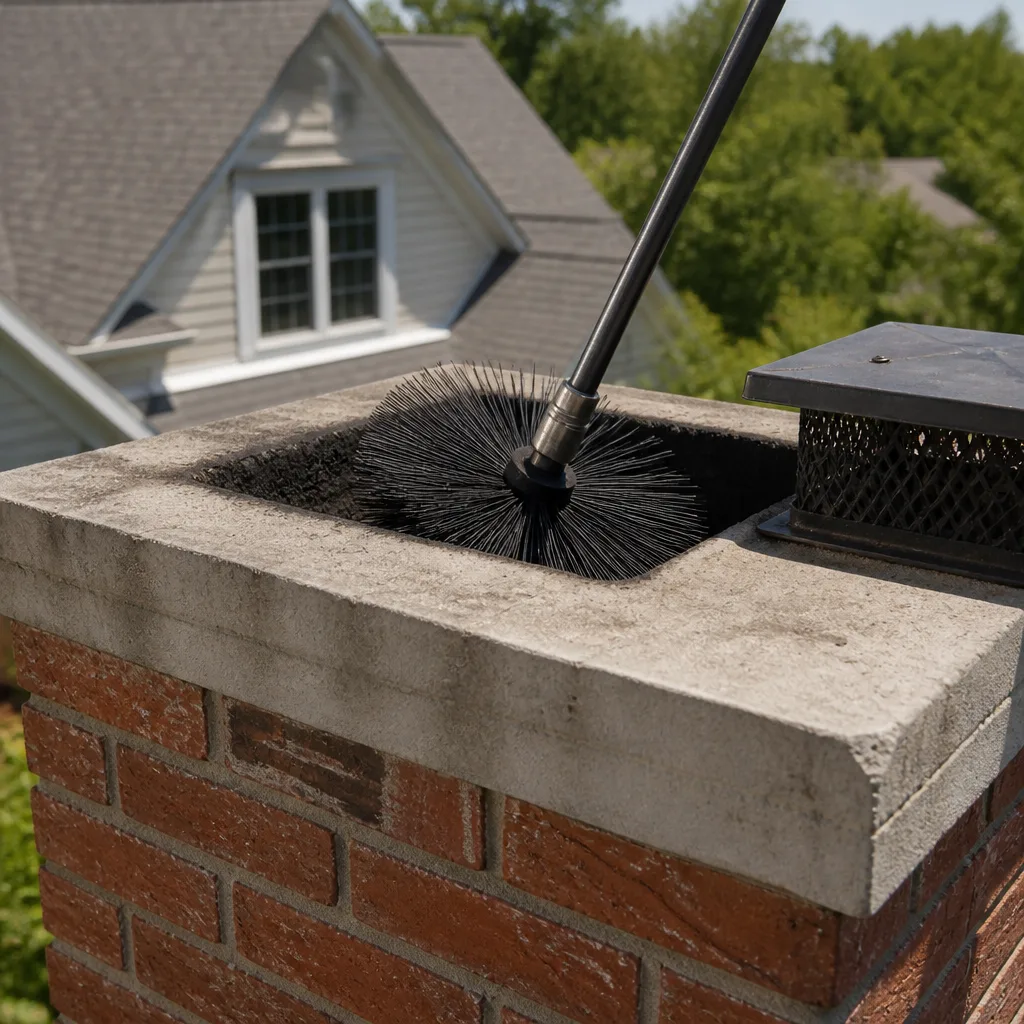 Sweep & inspection
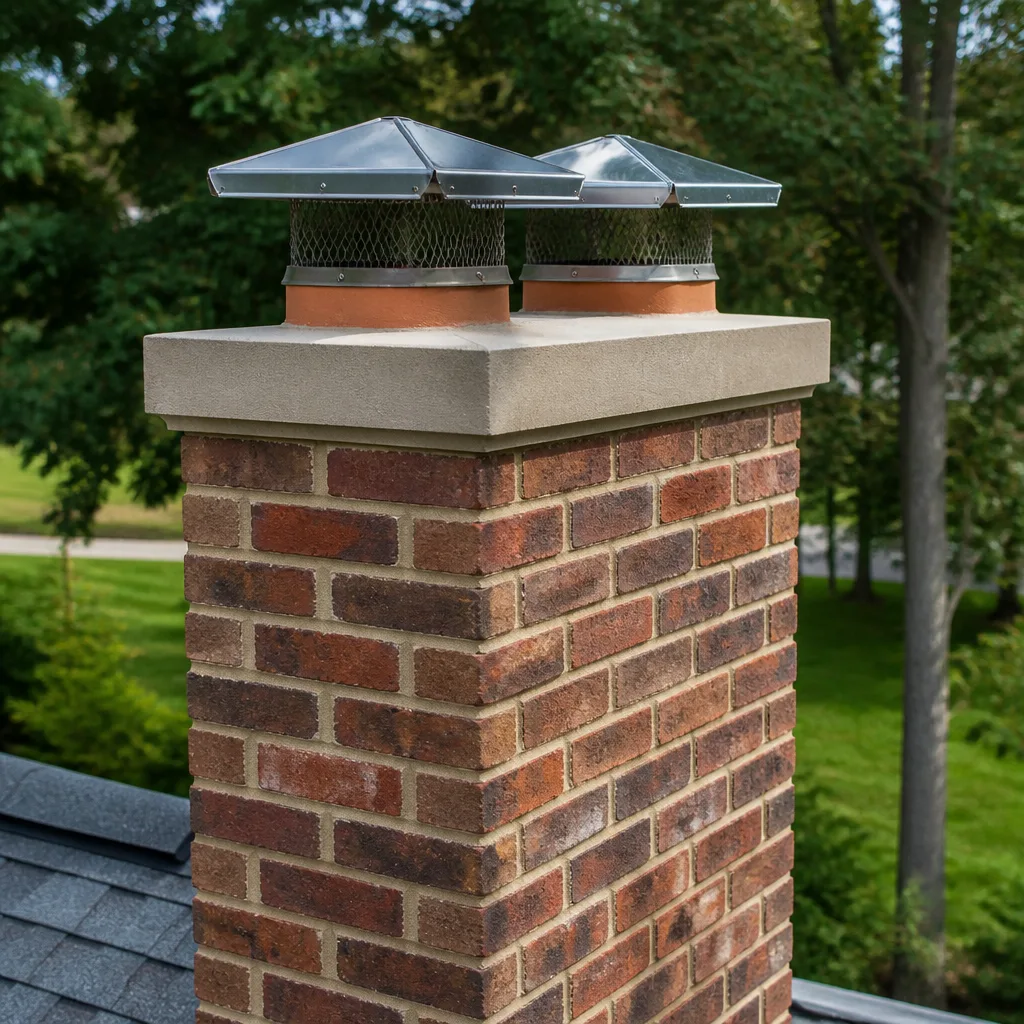 Caps & crowns
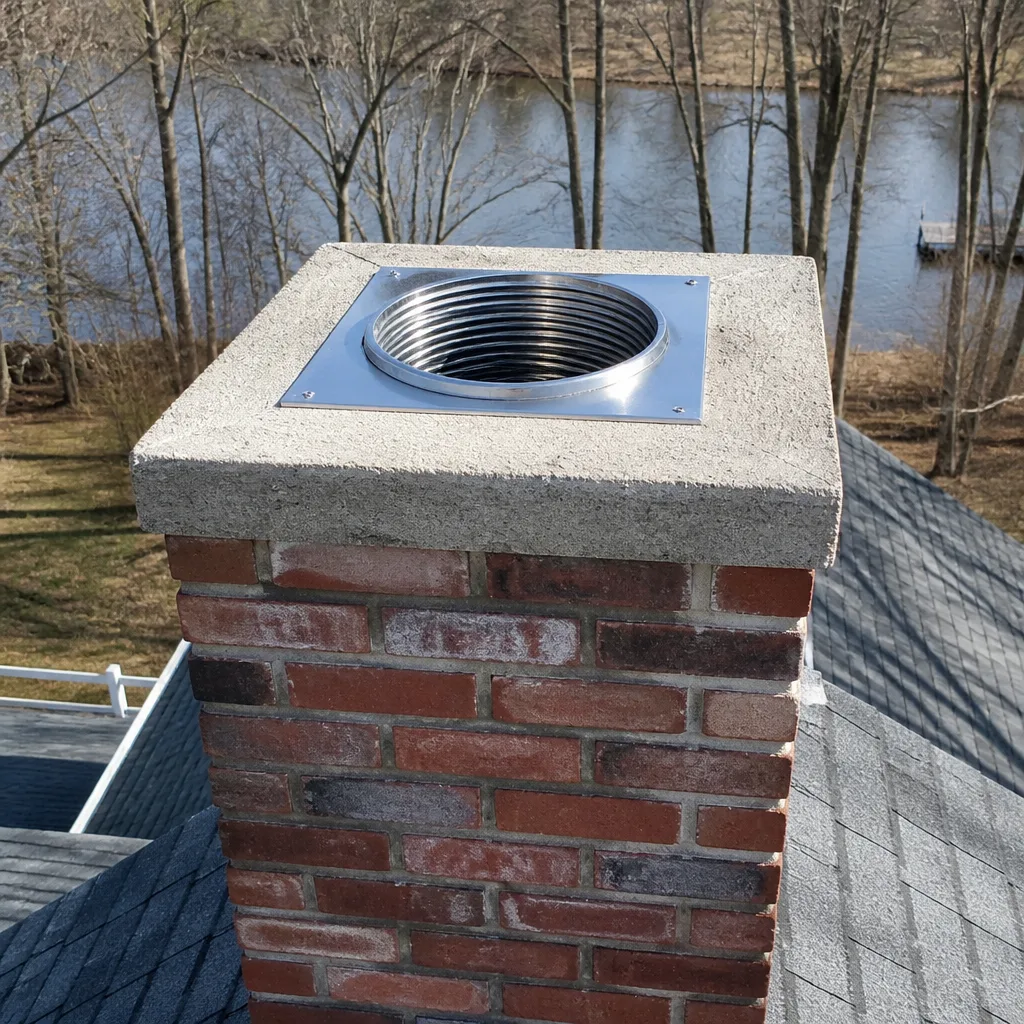 Flue relining
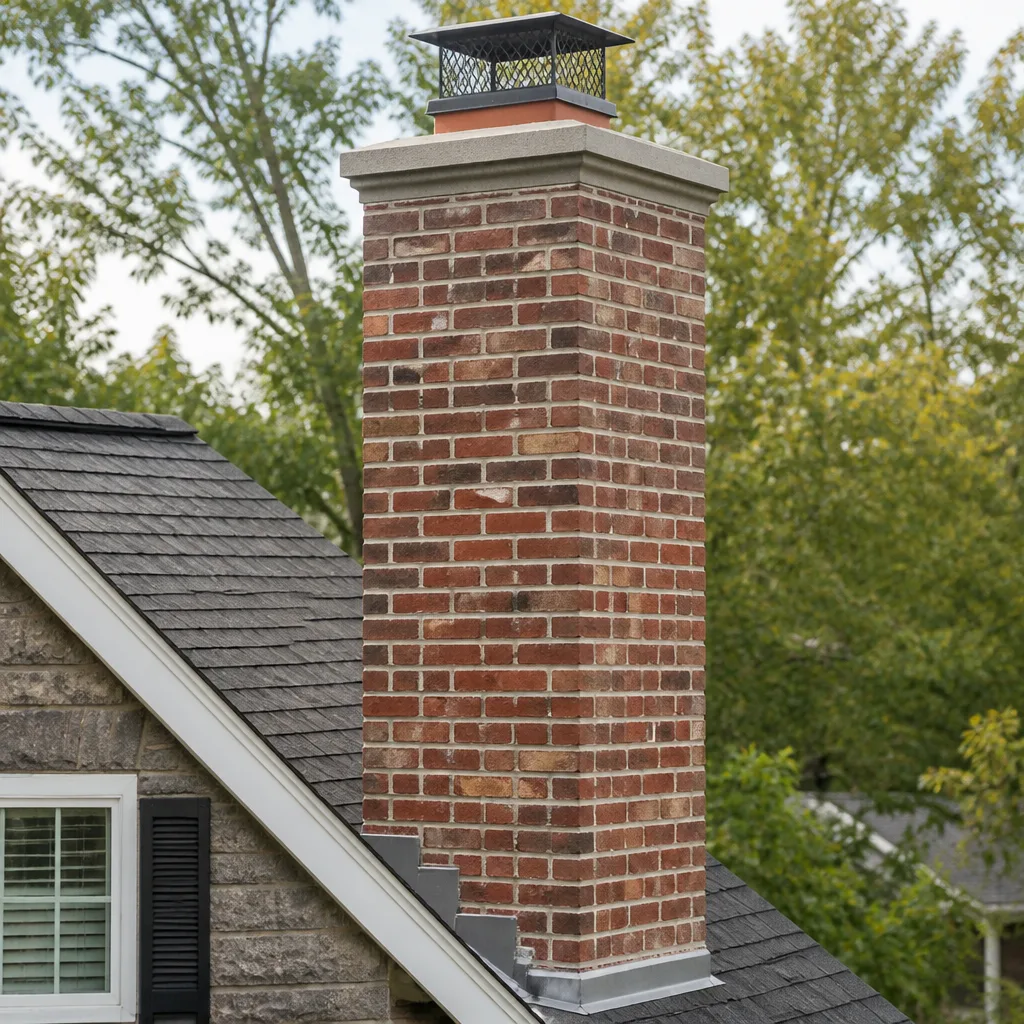 Masonry repair
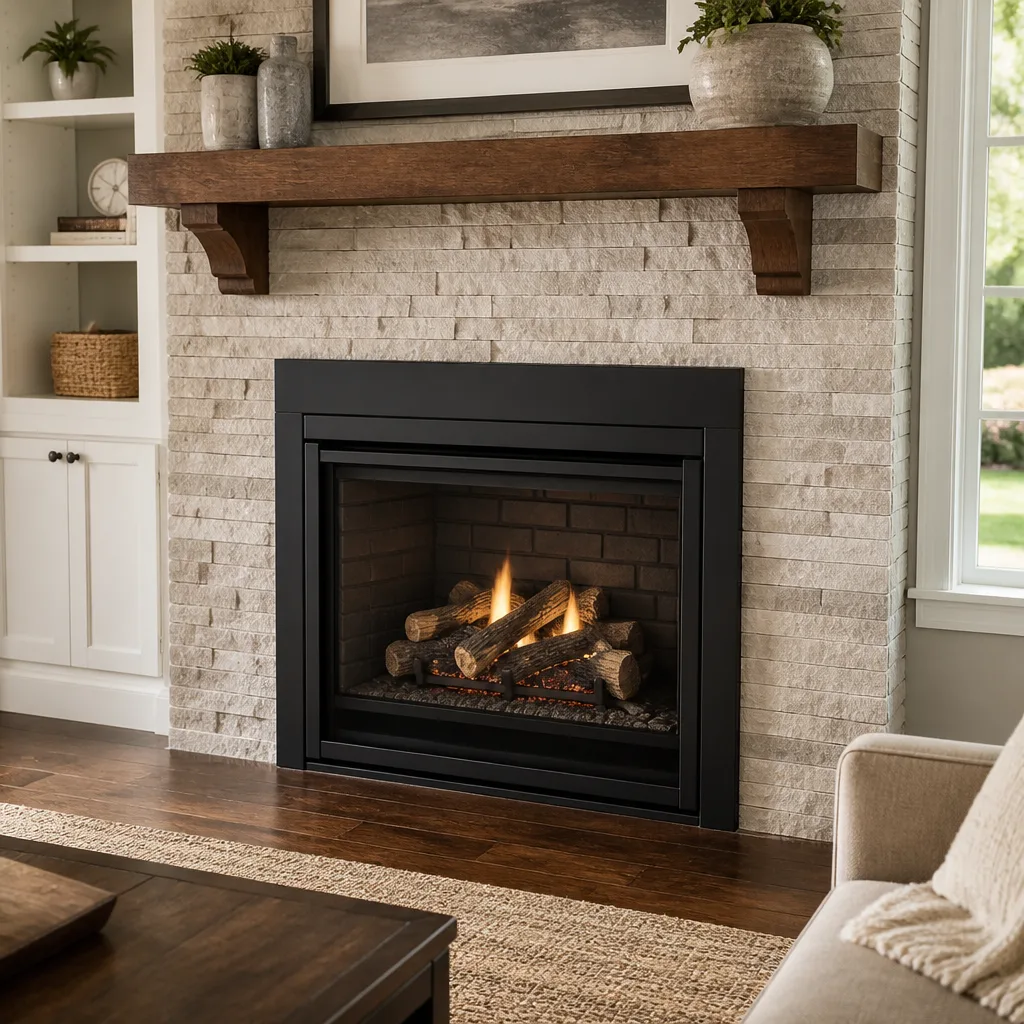 Gas fireplace service
Level 1 sweep and inspection to the NFPA 211 annual standard - flue, crown, cap, and flashing checked and photographed
Chimney sweep logs do not sweep chimneys. They loosen some creosote - which then falls where a brush and vacuum still have to collect it.
Seasonal Chimney Cleaning Care for Stapleton: Year-Round Homeowner’s Guide
The chimney damage Stapleton homeowners discover in October almost always started in April. When the last snow melts off a roof, water runs down an uncapped or uncrowned flue and soaks into masonry that won’t dry out for weeks. Nobody notices, because nobody’s looking at the chimney in spring. By the time the first fire gets lit, that trapped moisture has already done its work on the mortar joints. This guide treats each season in Stapleton as an active threat to a different part of your chimney, not as a reminder to book a fall sweep. You’ll learn what to watch for in spring, why summer makes an uncleaned flue worse, the correct fall sequence before your first fire, and how to monitor for real-time damage all winter without opening the system.
Quick Answer
Chimney care in Stapleton works best as a four-season cycle, not a single fall appointment: spring is for spotting freeze-thaw damage and water intrusion, summer is for sweeping before humidity hardens old creosote, fall is for sweeping and inspecting before the first fire, and winter is for watching draft, odor, and damper behavior for signs of active damage. A professional chimney sweep and inspection once a year, timed to your burning habits, is the backbone of the whole schedule.
Styles & brands we work with
- Sweep & inspection
- Caps & crowns
- Flue relining
- Masonry repair
- Gas fireplace service
Table of Contents
- Spring in Stapleton: When Water Does the Damage
- Summer: Why an Uncleaned Flue Gets Worse in Humidity
- Fall: The Correct Pre-Season Sequence
- Winter: Monitoring for Damage During Burning Season
- Matching the Season to the Chimney Component
- Why Stapleton’s Windows Are Tighter Than Inland New York
- Common Mistakes to Avoid
- When to Call a Professional
Spring in Stapleton: When Water Does the Damage
Spring is the season most homeowners ignore their chimney, and it’s the season doing the most quiet damage. Stapleton’s freeze-thaw cycle is the culprit. Water gets into a mortar joint, a hairline crack in the crown, or an uncapped flue during a warm afternoon, then the temperature drops below freezing overnight and that water expands. Ice takes up more space than water. The masonry has to give somewhere, and it usually gives at the surface: a flake of brick face pops off, a mortar joint crumbles a little wider, a crown crack opens another fraction of an inch. Repeat that cycle thirty or forty times across a Stapleton spring and you’ve got a chimney that looks fine from the street and isn’t.
The part competitors miss is telling fresh damage apart from old cosmetic wear. Spalling that’s actively happening has a few tells:
- Brick faces that are bright, rough, and lighter in color than the surrounding brick, meaning the surface broke off recently and hasn’t weathered yet.
- Mortar joints that crumble when you press them with a screwdriver, versus joints that are solid but stained or discolored from old deterioration.
- Efflorescence, the white powdery staining that shows water is actively moving through the masonry, versus old staining that’s dry and stable.
- Fresh brick dust or grit on the roof surface or in the gutter directly below a joint, which tells you something shed recently.
Old cosmetic damage doesn’t get worse on its own. Fresh spalling does, and it’s the difference between a repair that can wait until fall and one that needs attention now. If you’re not sure which you’re looking at, an inspection answers the question with photos rather than a guess. The right repair, not the most expensive one, is the whole point of catching freeze-thaw damage early: a crown crack sealed in May is a small job; the same crack after a summer of water intrusion into the flue is not.
Summer: Why an Uncleaned Flue Gets Worse in Humidity
A flue that went into spring with creosote on the walls doesn’t just sit there until fall. Summer humidity changes what that creosote is. Creosote starts as a soft, sticky deposit when a fire burns cool or smolders, and over time it hardens into a glaze. Humidity doesn’t cause that hardening on its own, but it accelerates the process by keeping the flue interior damp and giving the deposits a chance to absorb moisture and re-cure into something harder and more bonded to the liner. By September, what would have brushed off easily in June is now a glazed layer that takes more time, more technique, and sometimes a chemical treatment to remove.
That difference shows up in the work itself. A straightforward sweep on soft creosote is quick. A glazed flue in a Stapleton home that skipped a few seasons is a longer job, and it’s the kind of thing that should be inspected for a liner condition before anyone starts brushing, because aggressive cleaning on a compromised liner does more harm than good. This is exactly why we inspect it before we touch it. When we sweep a flue, we check the liner’s integrity first, and if the liner is a candidate for resurfacing, we use HeatShield’s ceramic resurfacing system to restore a code-compliant flue surface without pulling the whole liner. It’s a repair pathway that’s often the right answer for a flue that qualifies, and it’s a decision made from what the camera shows, not from a sales pitch.
There’s a second summer reason to sweep early: humidity in a closed-up house with no fire running for months is a fine environment for mold and mildew to establish on damp soot and debris. A summer sweep clears the fuel source before that becomes a problem, and it also gives you a chance to check the cap and crown before storm season. A cap that’s loose or a crown that’s cracked in June is a small fix; the same issue after a summer of rain has been driving water into the flue is a much bigger one.
Fall: The Correct Pre-Season Sequence
The standard advice is to “get your chimney swept before winter.” That advice is incomplete, and getting the order wrong is one of the most common mistakes we see. The correct sequence before your first fire is sweep, then inspect, then repair. Not repair, not inspect-then-sweep, not sweep-and-hope.
- Sweep first. You can’t properly inspect a flue that’s still coated in creosote and soot. The deposits hide cracks, gaps in the liner, and joint failures. A sweep clears the surface so the inspection sees what’s actually there.
- Inspect second, with a camera. A proper inspection runs a camera up the flue and produces a documented report with photos. That documentation is the baseline: it tells you what condition the flue is in, what’s changed since last year, and what needs attention before the burning season starts.
- Repair third, only what the inspection found. Liner repair, cap and crown work, or masonry repair all happen after the inspection, driven by evidence. If nothing needs repair, nothing gets recommended.
There’s a stubborn myth that lighting a fire before an inspection “burns off” a problem or confirms the chimney works. It does neither, and it creates a real risk: a fire lit in an uninspected flue is a fire in a flue nobody has confirmed is sound. Lit early in the season, before an inspection has documented the flue’s condition, it also weakens most homeowners’ insurance claims for chimney-related losses, because the insurer will want to know the chimney was maintained and inspected before use. Getting a documented inspection in the fall is as much an insurance and real-estate matter as a safety one.
Fall is also the season for cap and crown work before the weather turns. A chimney cap & crown replaced in September keeps the fall rain and the winter snow out of the flue all season. We use Gelco and Famco components for cap and crown work because they’re purpose-built chimney parts, weather-tight and sized for the job, not improvised sheet-metal patches. That’s the difference between a cap that lasts and one that’s back to leaking by the next spring.
Winter: Monitoring for Damage During Burning Season
Winter isn’t the season to open up the system and start poking around. It’s the season to monitor. Your chimney is in daily use, and the signs of active damage during the burning season show up in behavior, not in the flue itself. You don’t need to climb on the roof to catch them. You need to notice changes.
- Draft problems. A fireplace that used to draw cleanly and now smokes into the room, or pulls weakly, is telling you the flue’s airflow has changed. That can be a partial blockage, a liner problem, or a damper issue, and it’s the kind of change worth a call rather than a “wait and see.”
- Downdraft odors. Smoke smells in the room when the fire isn’t burning, or a puff of smoky air when you open the damper, point to a flue that isn’t holding its draft. Cold air sinking down an uncapped or poorly sealed flue is common in winter, and it’s also a sign the cap isn’t doing its job.
- Damper icing. A damper that’s stiff, stuck, or frozen shut tells you moisture is getting into the firebox area and freezing. That’s water intrusion finding its way in from above, and it needs to be traced before it does more damage to the damper assembly and the firebox.
- New staining or odor in the firebox. Fresh dark streaks or a persistent creosote smell during the burning season point to a liner or joint problem that’s letting deposits or moisture through.
If any of those show up, stop using the fireplace and get it looked at. Safety is the reason to act here. A chimney fire or carbon monoxide exposure doesn’t announce itself in advance, and a draft change or damper problem is sometimes the only warning you’ll get. This isn’t a scare tactic; it’s the reason we take draft complaints seriously and inspect rather than reassure over the phone. A fireplace repair or liner fix caught in December is a repair; caught after a fire, it’s a restoration project.
Matching the Season to the Chimney Component
Every part of a chimney has a season that stresses it hardest and a season when the fix is cheapest and easiest. Thinking about it this way turns year-round care into a real calendar instead of a vague intention.
- Masonry and mortar: stressed hardest in spring by freeze-thaw, best repaired in late spring or summer when the mortar can cure properly without freezing.
- Crown and cap: stressed hardest by fall and winter weather, best installed or replaced in fall before the weather turns.
- Flue and liner: stressed hardest by summer humidity hardening deposits and by winter burning, best swept and inspected in summer or early fall.
- Firebox and damper: stressed hardest in winter by water intrusion and heavy use, best inspected in fall and repaired in late winter or early spring.
That mapping is why a single annual sweep isn’t a full maintenance plan. A sweep clears the flue; it doesn’t tell you the crown is cracked or the damper is icing. The five service categories we handle, sweeping, inspection, cap and crown, fireplace repair, and chimney repair, are really five different jobs on five different schedules. One company, every part of your chimney, means the seasonal work happens on the right timeline instead of all getting bundled into a fall appointment that’s really only doing half the job.
Why Stapleton’s Windows Are Tighter Than Inland New York
Stapleton’s weather compresses the spring and fall repair windows compared to most of inland New York, and that has a practical effect on scheduling. Spring arrives with a faster thaw and more moisture in the air, so the freeze-thaw cycle that damages masonry is more intense and less predictable: a warm afternoon and a hard freeze the same night is a common Stapleton pattern, and each one is a fresh round of expansion inside every mortar joint. That means the window for getting masonry repair done between the last freeze and the first humid stretch is shorter than it is further inland, where the thaw comes slower and the freeze-thaw runs are fewer.
Fall runs the other way. The window between summer humidity and the first real cold is tight, and it’s the same window every homeowner in Stapleton wants for a fall sweep and inspection. When the first cold snap hits, the phone lines light up and the calendar fills. The homeowners who get their fall work done before that point are the ones who aren’t waiting for a sweep in the week they wanted to light the first fire.
None of this means you need to panic-book in July. It means the seasonal calendar is real, and the best time to schedule a spring repair or a fall inspection is before the season’s demand hits. Our technicians have up to 11 years of experience reading local conditions, and they can tell you in a free estimate whether your chimney needs spring work, fall work, or can safely wait. We answer 24/7. Fast dispatch from 7am to 7pm, Sunday through Friday.
Common Mistakes to Avoid
- Waiting until the first cold snap to book a sweep. Stapleton’s fall window is tight, and the people who call in October are competing with everyone else who waited. Book the fall sweep before the season starts.
- Sweeping in fall but never inspecting. A sweep clears the flue; it doesn’t document the liner, crown, or cap. Get the inspection with photos, especially in a house you just bought, because the documented baseline matters for insurance and resale.
- Repairing before sweeping or inspecting. Repair work done on an uninspected, unswept flue is guesswork. Sequence matters: sweep, inspect, then repair only what the camera shows.
- Ignoring spring spalling because it looks cosmetic. Fresh brick shedding and soft mortar in spring are active freeze-thaw damage. Old staining isn’t. Distinguish them before the summer rains find the crack.
- Letting old creosote sit through a humid summer. Soft deposits harden into glaze in humidity, and the fall cleaning becomes a bigger, more involved job. A summer sweep avoids that.
- Lighting a fire before the season’s inspection is done. It doesn’t confirm the chimney works; it puts a fire in a flue nobody has checked. It also weakens insurance claims for chimney losses.
- Assuming a capped chimney can’t take on water. A cap that’s loose, cracked, or undersized still lets water in, and a cracked crown lets it in from the top down. Both get checked in the fall.
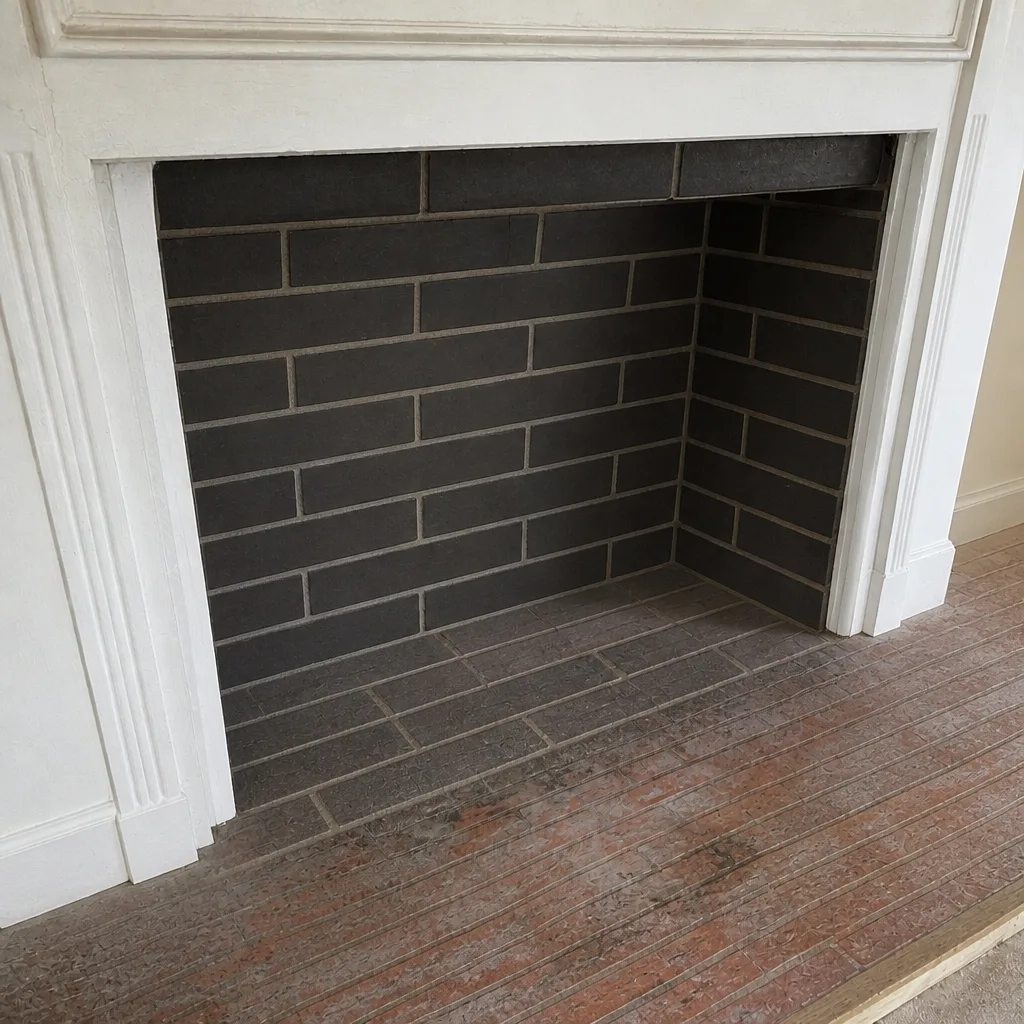
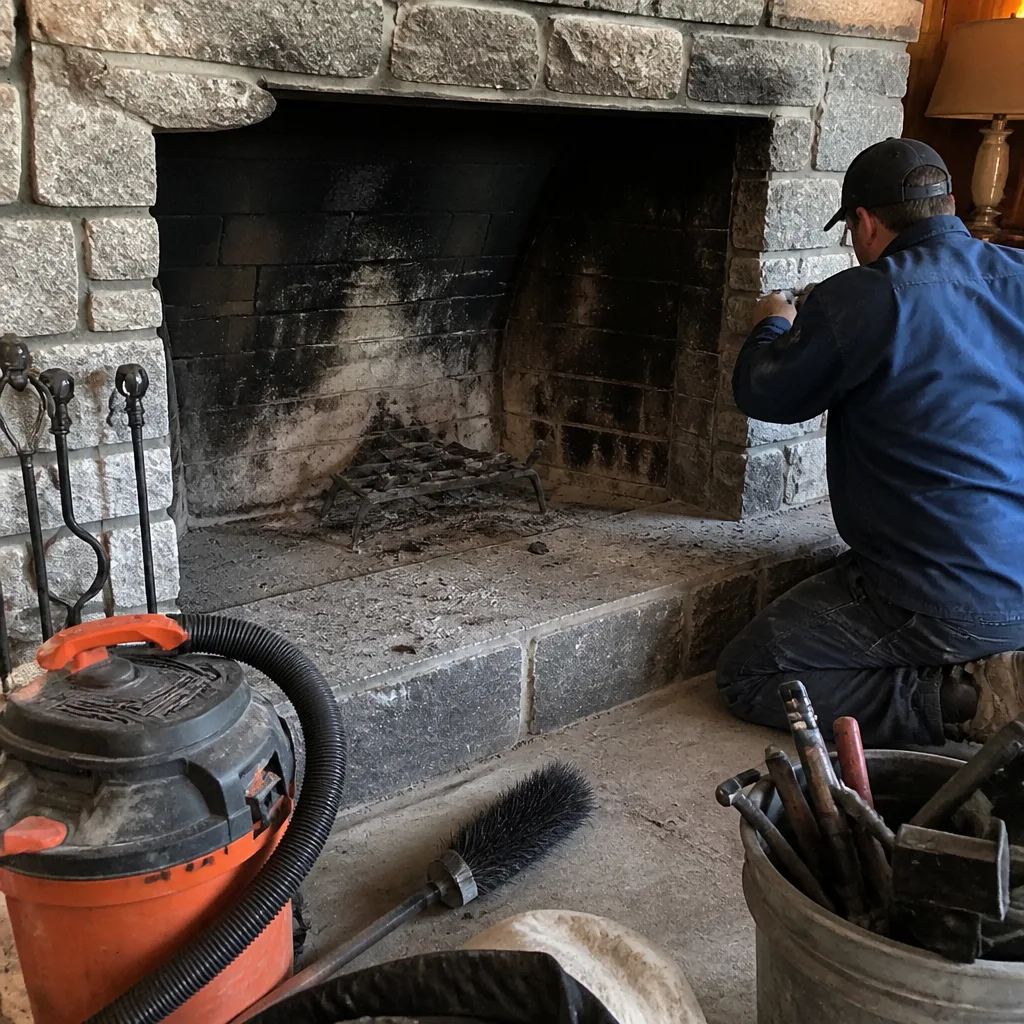
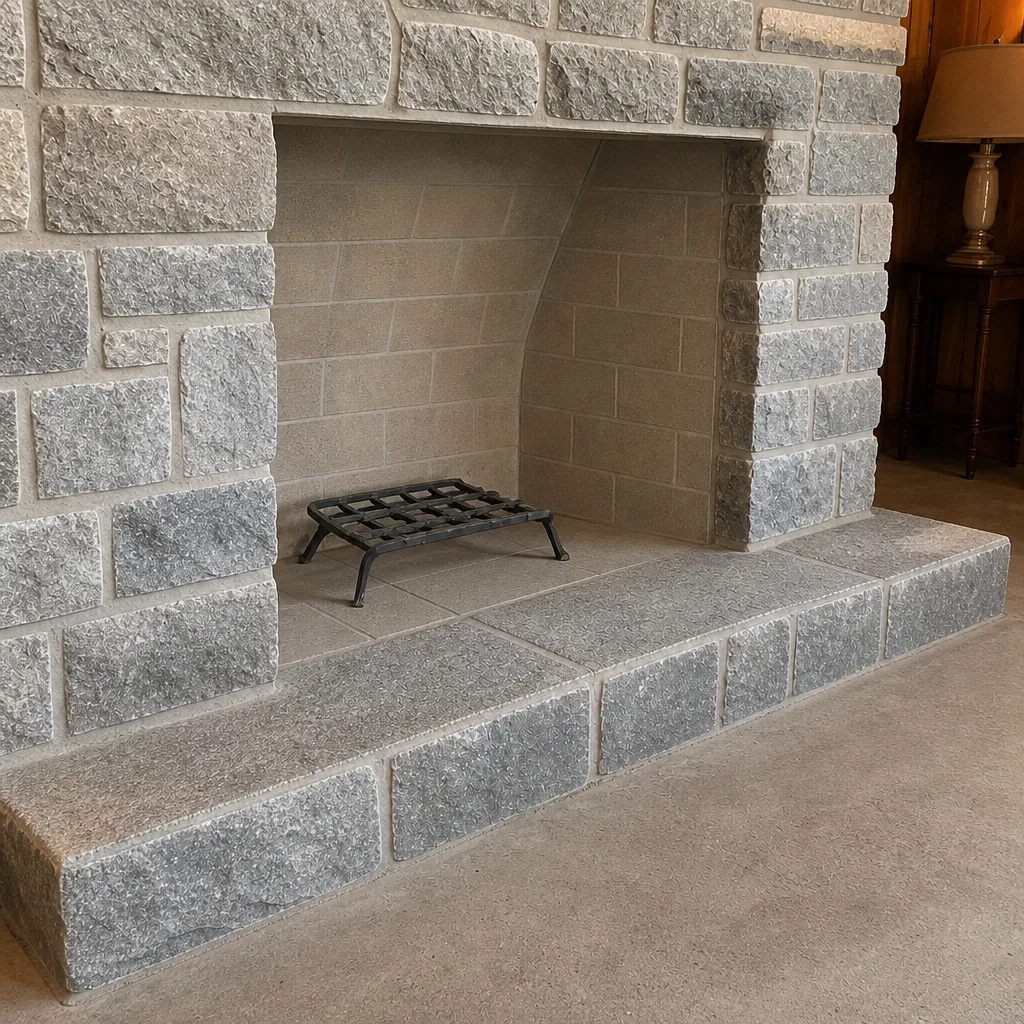
See the difference
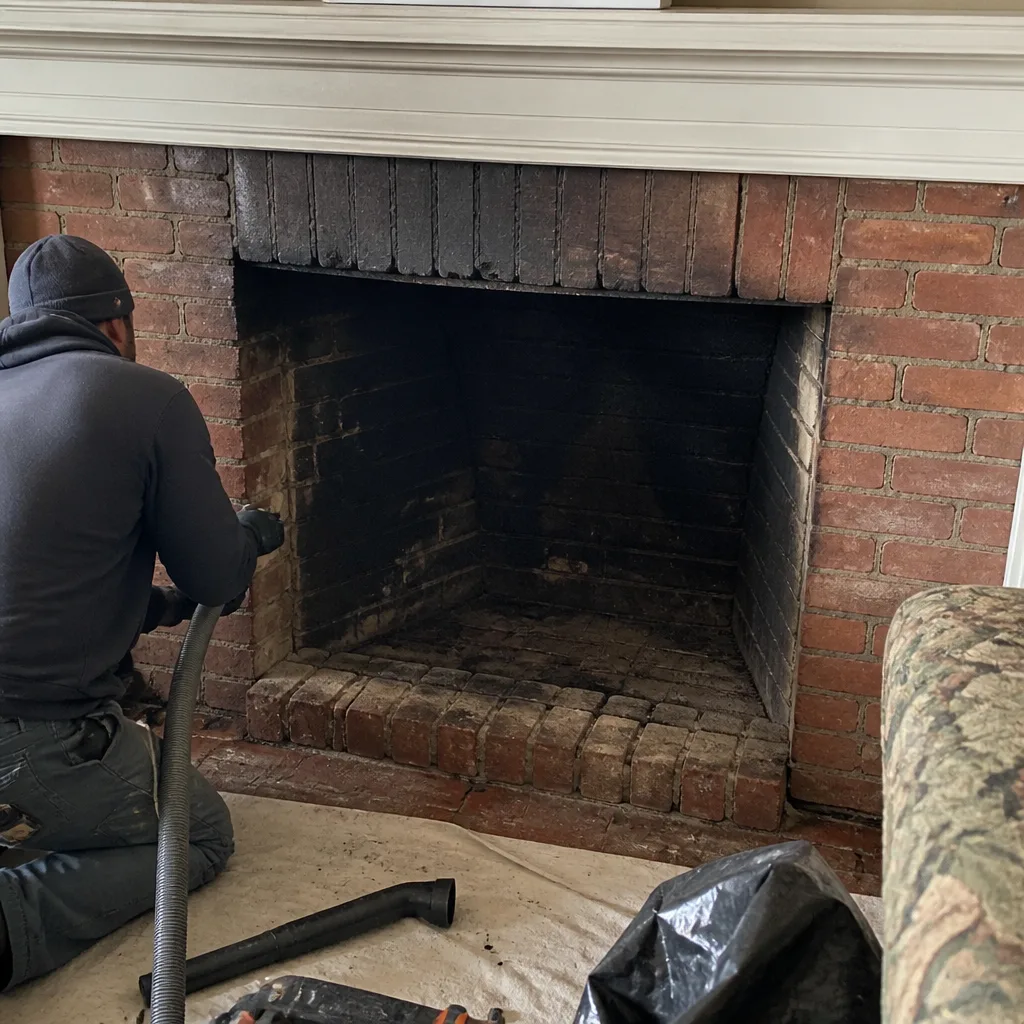 Before
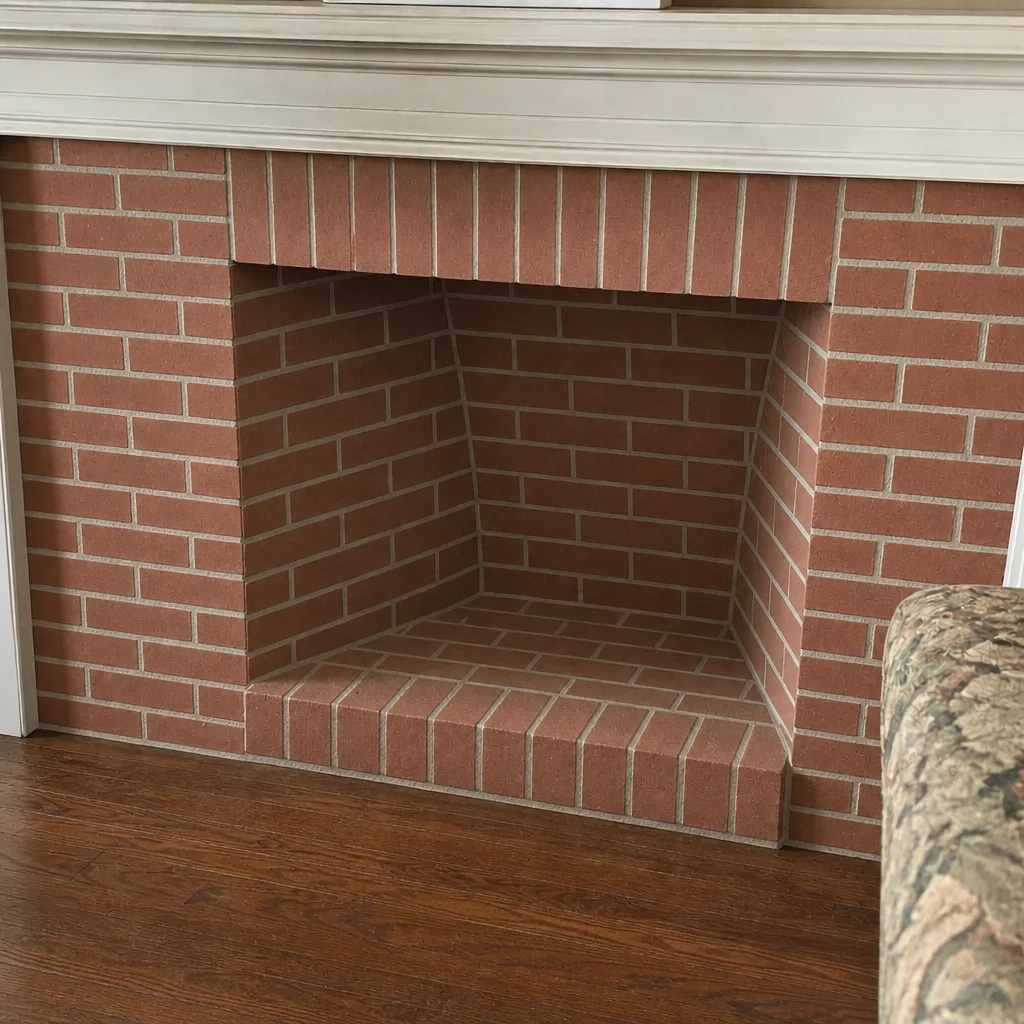 After
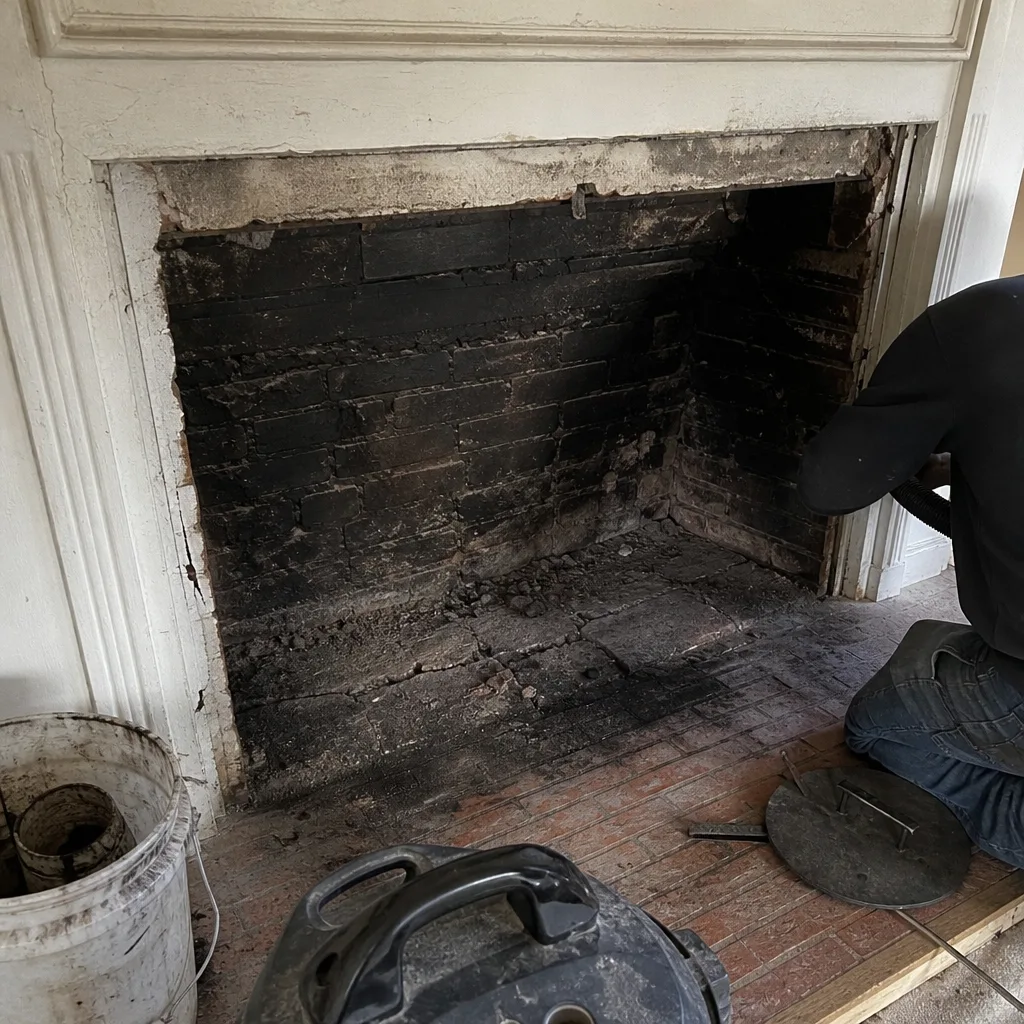 Before
 After
 Before
 After
When to Call a Professional
Call when you see fresh spalling or soft mortar in spring, when the fall season is approaching and you haven’t had a sweep, when you’re buying or selling a Stapleton home and need a documented inspection, or when anything in the winter monitoring list changes: draft, odor, damper icing, new staining. Call if you can’t remember the last time the chimney was inspected, if you’ve had a chimney fire or a near-miss, or if you’re switching to a new fuel or appliance. We use professional-grade components from DuraFlex, HeatShield, Gelco, Olympia Chimney, Famco, and Copperfield, and we inspect before we touch anything. Chimney Sweep Stapleton offers free estimates in Stapleton. Call (866) 280-5786. We answer 24/7. Fast dispatch from 7am to 7pm, Sunday through Friday.
Frequently Asked Questions
Once a year for most wood-burning households, and more often if you burn frequently or the flue has a history of heavy creosote. The annual sweep is the backbone, but it’s timed to your burning habits: if you light fires most nights in winter, a summer or early fall sweep keeps deposits from hardening. Call (866) 280-5786 for a free estimate.
Skipping a season doesn’t cause an immediate problem; it lets a small one grow. Spring water intrusion opens mortar joints another fraction, summer humidity hardens creosote into glaze, and a winter of burning on an uninspected flue runs without the documentation you’d want. The cost of catching it late is a bigger repair, so a season skipped is a repair deferred, not avoided. Call (866) 280-5786 for an exact quote; estimates are free.
Sometimes you do, and sometimes you don’t, and the only honest way to know is a camera inspection with photos you can see for yourself. When the flue qualifies, HeatShield ceramic resurfacing restores a code-compliant surface without a full liner replacement, and when it doesn’t, a DuraFlex flexible liner is a fit for older, offset, or irregularly shaped flues that rigid liners can’t serve. We inspect it before we touch it, and nothing gets recommended without camera evidence. Call (866) 280-5786 for a free estimate.
Yes, and it’s the season most homeowners miss. Stapleton’s freeze-thaw cycle drives water into mortar joints and crown cracks, freezes overnight, and expands, and repeated cycles across a spring do more surface damage than the rest of the year combined. Fresh spalling and soft mortar in spring are the signs, and the difference between fresh and old cosmetic damage is what an inspection is for. Call (866) 280-5786 for a free estimate.
You can, but you’d be getting half the service. A sweep clears the flue; it doesn’t document the liner, crown, cap, or firebox, and it can’t tell you what condition they’re in. The inspection is what produces the documented baseline you can point to for insurance, a real-estate transaction, or your own maintenance planning. It’s standard protocol for us, not an add-on. Call (866) 280-5786 for an exact quote.
Stop using the fireplace and get it looked at. Downdraft odors and smoke in the room point to a draft problem, and draft problems can stem from a partial blockage, a liner issue, or a damper problem. A draft change is sometimes the only warning you get, so it’s worth a call rather than a “wait and see.” Call (866) 280-5786. We answer 24/7. Fast dispatch from 7am to 7pm, Sunday through Friday.
The Bottom Line
Year-round chimney care in Stapleton is a calendar, not an annual chore. Spring is for catching freeze-thaw damage before summer rain finds the cracks. Summer is for sweeping before humidity hardens creosote into glaze. Fall is for sweeping, then inspecting with a camera, then repairing only what the inspection found, before the first fire. Winter is for watching draft, odor, and damper behavior for signs of active damage. The order matters, the documentation matters, and the right repair, not the most expensive one, is the goal. A documented inspection is the baseline that makes all of it work. Written by the team at Chimney Sweep Stapleton.
Whenever you’re ready to put the calendar to work for your home, call Chimney Sweep Stapleton at (866) 280-5786 for a free estimate. We answer 24/7. Fast dispatch from 7am to 7pm, Sunday through Friday. Not sure where you are in the seasonal cycle? A single inspection from Chimney Sweep Stapleton tells you exactly what your chimney needs and when it needs it.