
Last updated November 25, 2026
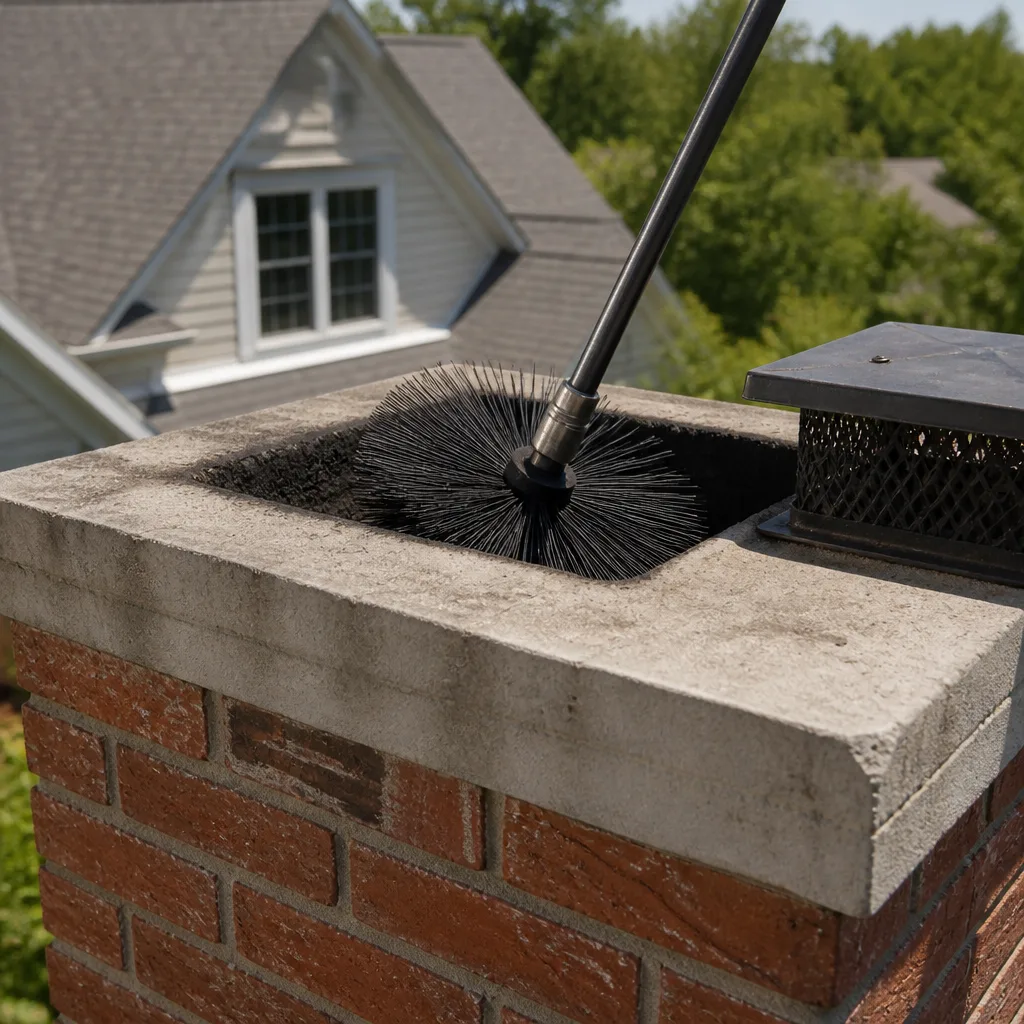 Sweep & inspection
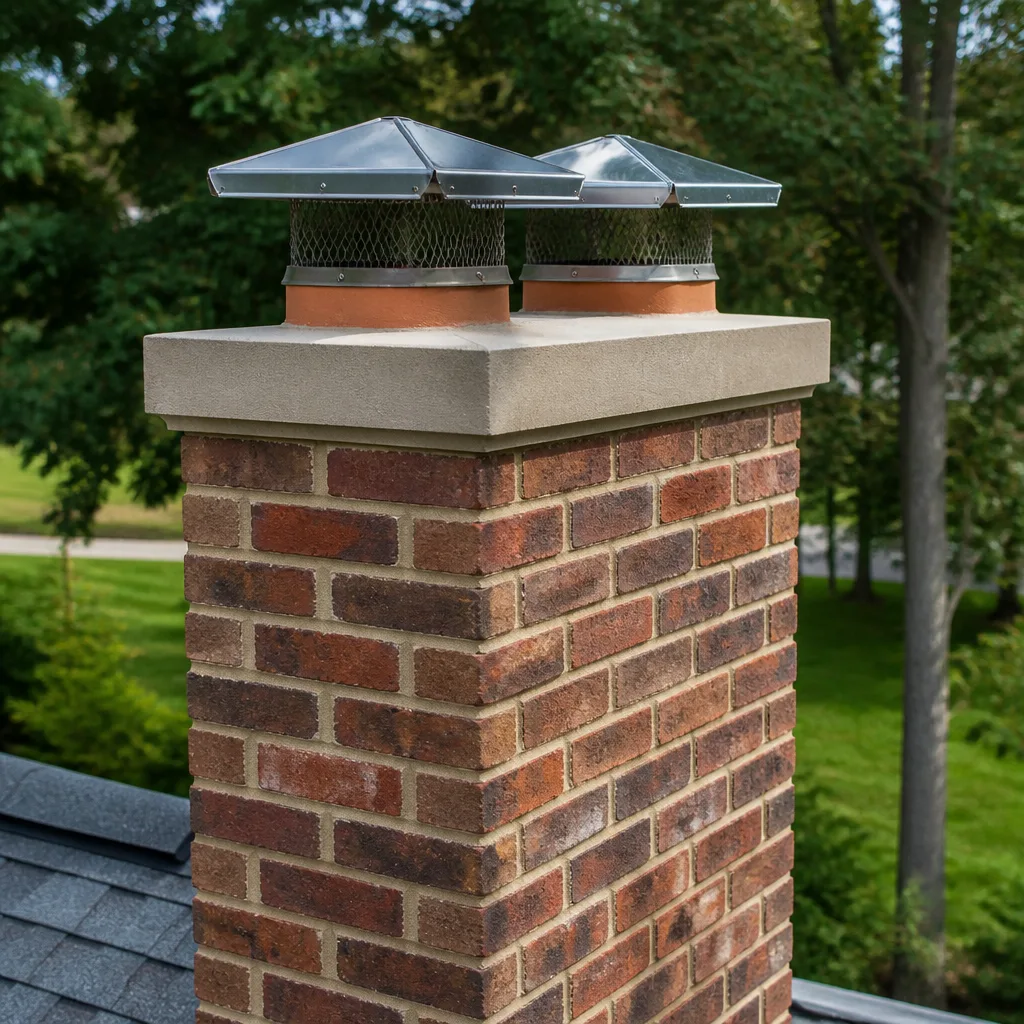 Caps & crowns
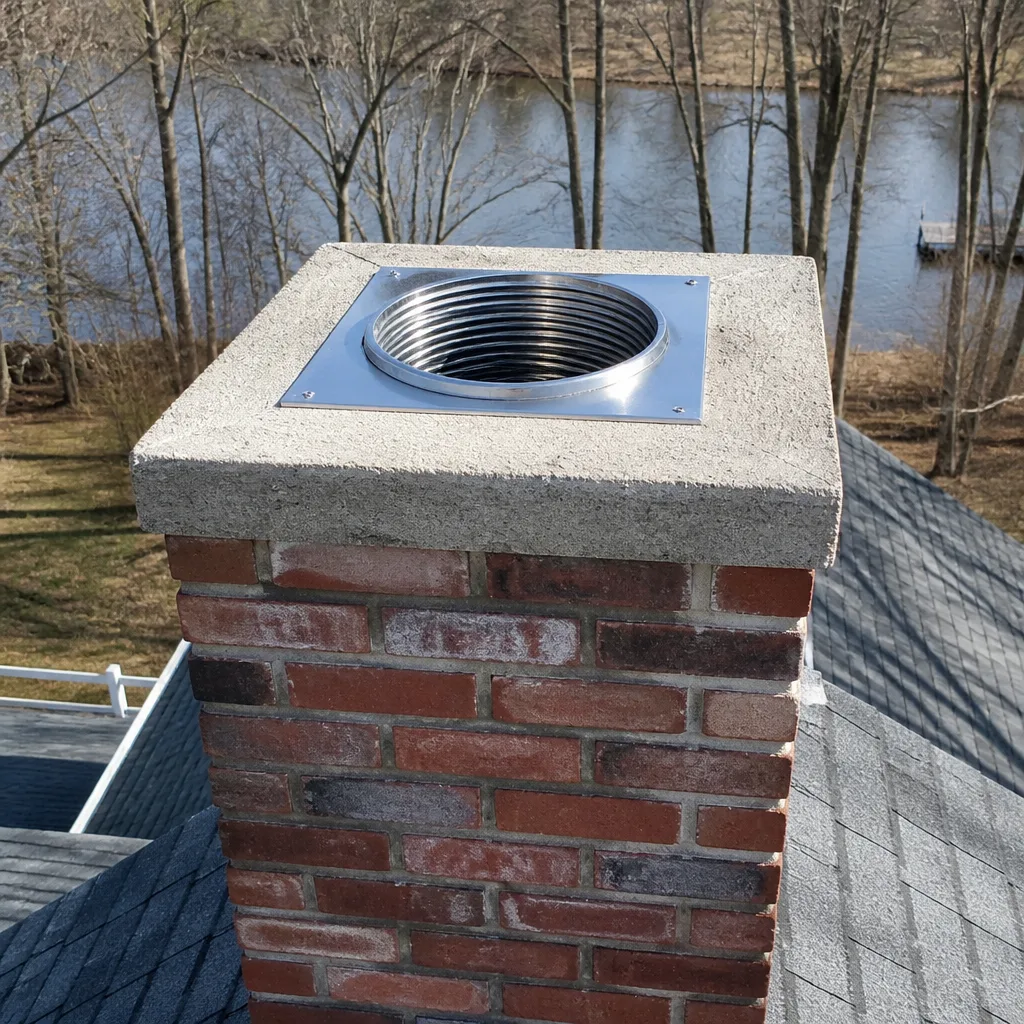 Flue relining
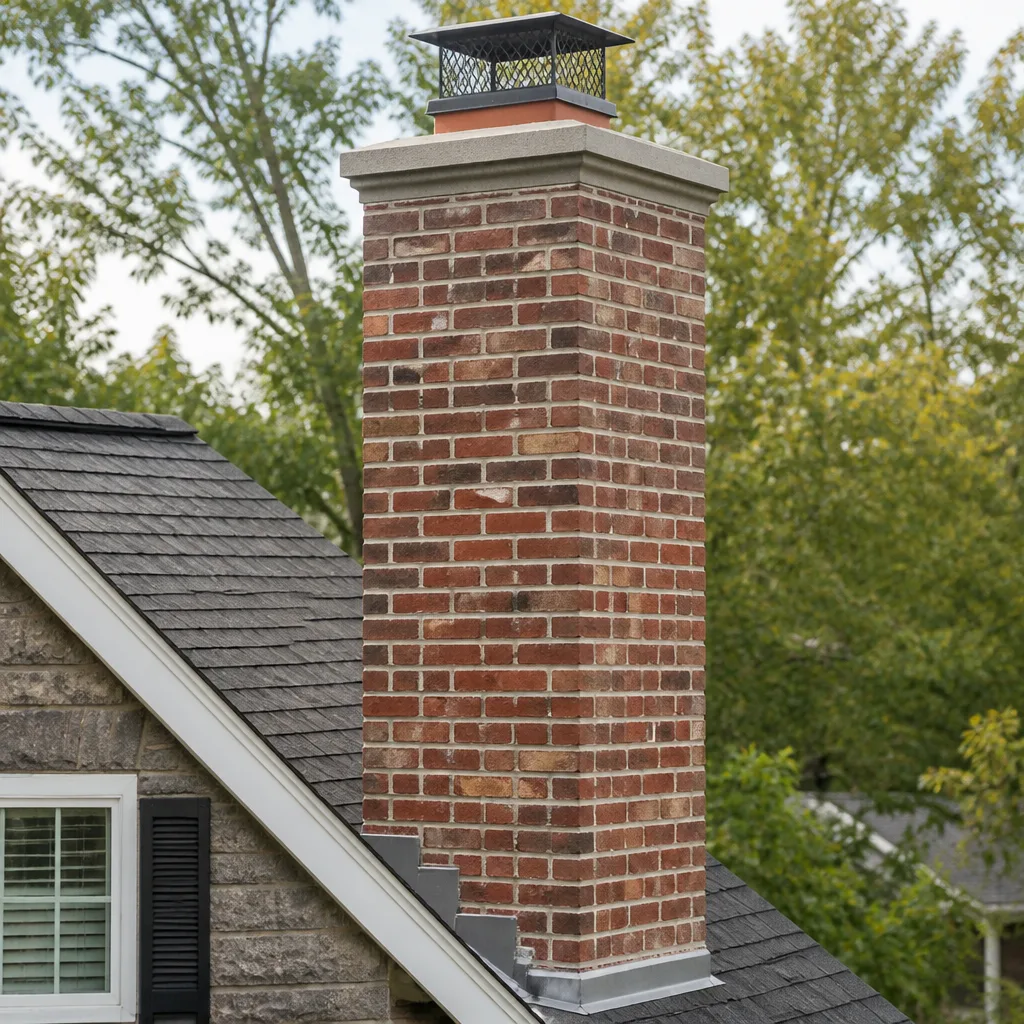 Masonry repair
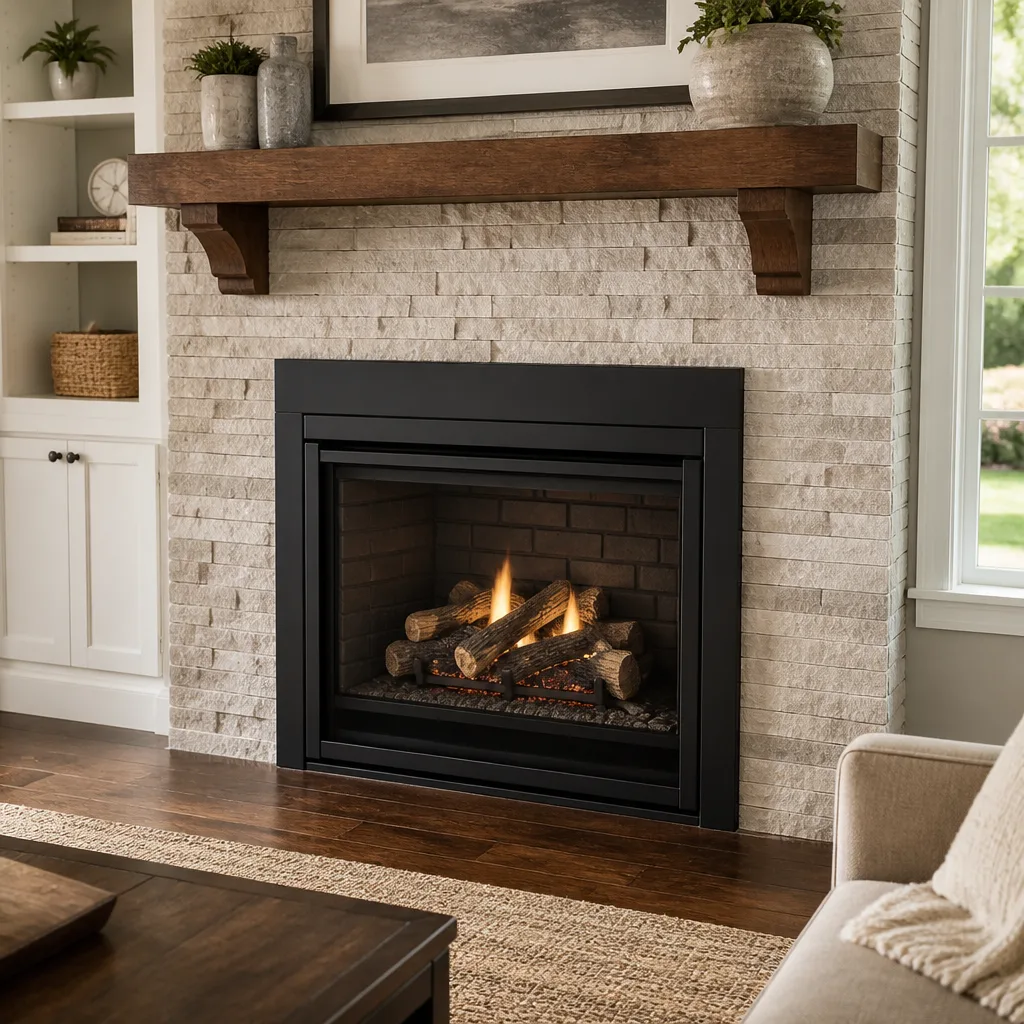 Gas fireplace service
Level 1 sweep and inspection to the NFPA 211 annual standard - flue, crown, cap, and flashing checked and photographed
Chimney sweep logs do not sweep chimneys. They loosen some creosote - which then falls where a brush and vacuum still have to collect it.
Chimney Sweep Maintenance Checklist for Stapleton Homeowners
The chimney cap is the first thing to fail and the last thing anyone looks at. In Stapleton‘s wet winters, a missing or cracked cap lets water straight into a flue that was swept and inspected last fall, and one season of that can undo an otherwise perfect liner. The parts of a chimney don’t age together. The crown erodes on its own timeline, the flashing pulls loose on its own, the mortar joints in a freeze-thaw climate spall faster than the firebox ever will. What follows is a component-by-component maintenance checklist organized the way a chimney actually fails, plus which items you can check from the ground and which genuinely need a camera or a pro on the roof.
Quick Answer
A chimney maintenance checklist for a Stapleton home should cover seven components in order of how fast they fail: cap, crown, flashing, exterior masonry, smoke chamber, damper, liner, and firebox. Check the cap, crown, and flashing from the ground with binoculars each fall. Have the flue camera-inspected and swept by a professional once a year for wood-burning chimneys, every two to three years for gas inserts, and periodically even if the fireplace is never used. Log every finding with a date and photo so you can show progressive deterioration to a contractor or an insurer later.
Styles & brands we work with
- Sweep & inspection
- Caps & crowns
- Flue relining
- Masonry repair
- Gas fireplace service
Table of Contents
- Why a Component Checklist Beats an Annual Checkbox
- The Cap and Crown: First to Fail, Last to Be Noticed
- Flashing and Exterior Masonry in Stapleton’s Freeze-Thaw Cycle
- Smoke Chamber and Damper: The Hidden Efficiency Loss
- The Flue Liner: What a Camera Sees That You Can’t
- The Firebox and Fireplace Structure
- What You Can Check From the Ground vs. What Needs a Pro
- How to Log Findings Over Time (and Why It Matters)
- The Minimum Viable Schedule: Wood, Gas, and Decorative Chimneys
Why a Component Checklist Beats an Annual Checkbox
Most chimney maintenance advice tells you to “sweep once a year” and stops there. That instruction treats a chimney as one object with one failure mode. It isn’t. A chimney is a stack of components that weather at completely different rates, and each one fails for a different reason. A cap fails because of wind uplift and UV on the mesh. A crown fails because water pools at its edges and freezes. A liner fails because of creosote contact, condensation, or a flue fire the homeowner never knew happened. Flashing fails because the seal between metal and masonry expands and contracts at a different rate than either material alone.
Stapleton sits in the kind of climate that makes component-level thinking matter more, not less. Freeze-thaw cycling here is relentless through the cold months, and mortar joints that would last for years in a milder climate can spall and crack when water gets in and refreezes behind them. That’s the single biggest local stressor: not heat, not even creosote, but water finding a way into masonry and expanding when it freezes. Homeowners in Stapleton who think of maintenance as an annual sweep miss the components that actually drive most repair costs, because those components aren’t inside the flue at all.
This guide is organized the way our technicians think about a chimney during an inspection: top to bottom, outside in, one component at a time. Read it as a system. Come back to it each season. The homeowner who understands each part’s failure mode will always get a straighter answer and a fairer estimate than the one who just asks “how much for a sweep.”
The Cap and Crown: First to Fail, Last to Be Noticed
The chimney cap and crown are the two most neglected components in a Stapleton chimney. The cap is the metal or mesh cover on top that keeps water, animals, and debris out of the flue. The crown is the concrete or masonry surface at the very top that slopes away from the opening so water runs off instead of pooling. Both sit at the top of the stack, away from daily view, and both fail before the homeowner notices anything indoors.
Here’s the failure mode to know:
- Cap: Mesh corrodes through, the top plate cracks or lifts, or the whole cap shifts off the flue opening after a wind event. Once the cap is compromised, rain and snow go straight into the flue and start attacking the liner, the damper, and the smoke chamber.
- Crown: Hairline cracks appear at the edges first, then widen. Water gets behind the crown and freezes. In Stapleton’s winters, one hard freeze-thaw cycle can turn a hairline into a spall that drops masonry down onto the cap or the flue opening.
Inspection method: stand back from the house with binoculars and look squarely at the top of the stack. You’re looking for a level, intact crown and a cap that’s sitting straight and fully covering the flue opening. If your crown has visible cracks wide enough to catch a fingernail, or your cap is tilted, missing mesh, or no longer attached, that’s a repair. We install chimney cap & crown components from Gelco and Famco because those are purpose-built for weather-tight sealing; improvised sheet-metal fixes rarely last a Stapleton winter. This is a straightforward repair and catching it early is how you keep the liner below from becoming a much bigger job.
Flashing and Exterior Masonry in Stapleton’s Freeze-Thaw Cycle
Flashing is the metal seal at the roof line where the chimney meets the roof. It’s the joint most prone to silent leaks, because water that gets past flashing runs down the outside of the chimney rather than into the flue, so the homeowner sees a stain on the ceiling, not smoke in the room. In a freeze-thaw climate, flashing is also where small gaps turn into big ones fast: the metal expands with heat and contracts with cold at a different rate than the masonry it’s sealed to, and that cycling loosens the seal over years.
Inspection method: from the ground or from a safely accessible roof edge, look at the flashing line for curled metal, lifted edges, cracks in the sealant, or rust. Then look at the exterior masonry of the stack itself:
- Mortar joints that are receded, crumbly, or missing.
- Spalled brick faces (brick that has lost its front surface).
- White powdery staining on the brick, which is mineral residue left by water migrating through masonry.
- Any visibly leaning or bowed section of the stack.
A useful way to think about it: mortar is designed to be sacrificial, and re-pointing it periodically is normal maintenance, not a sign of a failing chimney. Skipping it is what turns a re-pointing job into a rebuild. On a Stapleton home, the freeze-thaw pattern means those joints should be looked at every year from the ground, because once water gets behind the face, the damage can move through a wall faster than you’d expect.
Smoke Chamber and Damper: The Hidden Efficiency Loss
The damper is the metal door above the firebox that you open before you burn and close after. The smoke chamber is the funnel above the damper that guides smoke from the firebox up into the flue. Most homeowners never look inside either one after the first year. The damper is what makes the transition from firebox to flue work; the smoke chamber is what makes it draft.
Failure modes here are quiet:
- Damper: The plate warps, the hinge seizes, or the frame rusts. A damper that won’t fully close lets warm house air escape up the flue all winter, which is a real efficiency loss. A damper that won’t fully open chokes the fire and pushes smoke into the room.
- Smoke chamber: Rough masonry surfaces collect creosote and soot that no brush reaches easily. Over time, the coating can become a genuine fire hazard, and rough masonry increases turbulence, which is why some Stapleton homes smoke at the fireplace even when the flue is otherwise clean.
The smoke chamber is the strongest argument for a camera inspection over a plain sweep. A technician can brush the flue and never see the smoke chamber walls at all. A camera inspection shows the condition of the walls, the damper plate, and the smoke shelf in detail, and that’s what lets us tell a homeowner whether the fireplace is a safe, efficient system or a slow accumulation waiting for a bad night. We inspect before we touch anything, and we recommend a camera inspection on any chimney we haven’t documented before. If the smoke chamber walls are deteriorated but the flue itself is sound, ceramic resurfacing with HeatShield can smooth and seal the surface as a code-compliant repair pathway, and it’s often the right repair rather than the most expensive one. For broader structural repairs on the fireplace, see fireplace repair.
The Flue Liner: What a Camera Sees That You Can’t
The flue liner is the most consequential and least visible part of the checklist. It’s the clay tile, metal, or cast-in-place surface inside the flue that contains the heat and byproducts of combustion. If the liner has a crack, a gap at a joint, or a hole, carbon monoxide and heat can migrate into the surrounding masonry, the framing, or worse. A chimney can look fine from the top of the stack and still have a failed liner halfway up.
Failure modes:
- Clay tile liners: Hairline cracks that widen with heat cycling, missing mortar at the joints, and tile sections that spall and drop. A dropped tile fragment can block part of the flue and reduce draft dangerously.
- Metal liners: Seam failures, corrosion at the top near the cap (especially if the cap has been missing), and collapse of older flexible liners that were never sized for the appliance now connected to them.
- No liner at all: Some older Stapleton homes still have unlined flues. Those need to be lined before the fireplace or insert is used, and this is where proper diagnosis matters most.
The only reliable inspection is a camera. Our technicians run a flue camera from top to bottom and provide a photo or video record so the homeowner sees what we see, and nothing is recommended that isn’t backed by that evidence. Where a flue is irregular, offset, or too aged for a rigid liner, DuraFlex flexible liner systems are the right tool because they conform to the existing shape where a rigid liner can’t be made to fit. When a full liner is not strictly needed but the flue walls are deteriorated, HeatShield ceramic resurfacing can be the right answer. We don’t recommend the most expensive repair. We recommend the one the camera justifies, and we say plainly when work can safely wait. For the full scope of what we handle on a liner or flue repair, start with Chimney Sweep Stapleton.
The Firebox and Fireplace Structure
The firebox is the chamber where the fire actually burns. It takes the most direct heat of any part of the chimney system, and its failures are the ones homeowners notice first because they happen at eye level. A firebox that feels loose, smells smoky when the fire is out, or shows cracks in the brick or mortar is telling you something.
What to look at:
- Brick faces inside the firebox: Look for spalling, cracks, or brick that sounds hollow when tapped lightly. Missing brick faces expose the mortar behind them to direct flame.
- Mortar joints: Crumbling or missing mortar at the joints, especially at the rear wall and the sides.
- The firebox floor: Cracks or crumbling at the hearth or the firebox floor itself.
- The smoke shelf: The ledge at the back of the firebox that helps control draft; look for debris buildup or a deteriorated surface above it.
- Draft: A fireplace that smokes into the room on a cold start is a draft symptom, and the cause may be a firebox problem, a damper problem, or a smoke chamber problem.
Firebox repairs are where we often see homeowners prepared to spend more than they need to. Small cracks in the firebox mortar can often be repaired. Deteriorated firebox panels are a real repair, and should be done before the fireplace is used again; a firebox breach can let heat and flame reach material that shouldn’t see any. Gelco and Famco masonry and cap components show up on a lot of our firebox and crown work because they hold up to heat and weather respectively. We’d rather fix what’s actually broken than tell you to rebuild a fireplace that just needs mortar and a sweep.
What You Can Check From the Ground vs. What Needs a Pro
This is the most useful split in the whole checklist. Plenty of chimney maintenance is entirely within a careful homeowner’s reach from the ground. Plenty of it isn’t, and knowing which is which is the difference between catching a problem early and creating one on a ladder.
Safe to check yourself (from the ground, with binoculars)
- Cap presence and condition: is it there, is it straight, is the mesh intact?
- Crown condition from a distance: cracks, spalling, obvious erosion at the edges.
- Flashing line at the roof if you can see it safely from the ground.
- Exterior masonry condition: receded joints, spalled brick faces, efflorescence.
- Any visible lean or bow in the stack.
- Signs of animal activity at the cap (droppings, nesting material, visible birds).
Needs a camera, a ladder, or both
- Flue liner condition, joint condition, and any obstruction.
- Smoke chamber interior.
- Damper operation and plate condition.
- Firebox brick and mortar inside the chamber.
- Creosote buildup level inside the flue.
- Sweeping itself, unless you have the proper brushes, rods, drop cloths, and commercial vacuum to keep the soot inside the flue and out of the room.
One word on ladders and roofs: they’re the most common place a well-intentioned homeowner gets hurt trying to maintain a chimney. If you can’t see it safely with binoculars from the ground, that’s a job for a technician on proper equipment. Our chimney sweep and inspection service includes the camera inspection and photo report so you have a documented record of what’s up there, at no risk to your knees or your roof.
How to Log Findings Over Time (and Why It Matters)
A chimney is a slow-motion system. The difference between “minor crack” and “spalled joint that needs re-pointing” is almost always the direction and speed of change, not the size of the defect on the day you see it. That’s why we tell Stapleton homeowners to keep a maintenance log, and why we hand over documented inspection findings after every visit.
How to keep the log:
- Create a single folder or notebook. Paper or digital, either works, but keep every inspection report, invoice, and photo in one place.
- Record the date and what you observed. “Crown hairline crack at rear edge, about the width of a fingernail, October.” That sentence is worth more than a phone photo alone.
- Take the same photo each year from the same spot. Same angle, same distance, same time of day if you can. Comparison is the point.
- Note any change in how the fireplace behaves. More smoke roll on cold starts, a smell when the fire is out, a damper that feels different.
- Attach the technician’s photo report to the log after every inspection. That gives you a professional baseline against which your own yearly photos make sense.
- Keep the log with your home records. This matters for insurance and for any future sale of the home.
If you sell a Stapleton home, a documented maintenance log is one of the strongest things you can hand a buyer’s inspector, because it shows a chimney that was cared for, not just one that passed a single inspection on a single day. If you have a claim related to a chimney problem, the log shows the history of the component: whether it was documented as sound, deteriorating, or already repaired. We hand over an inspection report and photo record after every visit so that history exists, whichever direction the future goes.
The Minimum Viable Schedule: Wood, Gas, and Decorative Chimneys
Every chimney in Stapleton needs a schedule. The schedule is not the same for every chimney. The frequency your fireplace, insert, or non-used chimney needs depends entirely on what’s attached to it.
Wood-burning chimney (open fireplace or wood stove)
- Annually: Sweep and camera inspection. This is the baseline. A wood-burning flue accumulates creosote every season the fireplace is used, and creosote is the fuel that makes chimney fires possible.
- Annually (from the ground): Binocular check of cap, crown, flashing, and masonry.
- As needed: Firebox mortar repair, damper service, and re-pointing of receded exterior joints.
- Every few years: Service the crown and cap even if they look fine; preemptive replacement of Gelco or Famco cap and crown components is far cheaper than the liner repair a missing cap drives.
Gas insert or gas fireplace chimney
- Every two to three years, or per the appliance manufacturer’s schedule: Inspection and cleaning. Gas produces less creosote than wood, but it also produces condensation, which is hard on metal liners and masonry.
- Annually from the ground: The same visual check as a wood-burning chimney. A missing cap on a gas flue lets in water, and condensation plus rain is harder on the system than creosote.
- Any time the appliance is replaced: Re-inspect the flue, because a new appliance may require a liner sized for its venting needs.
Decorative or non-use chimney (fireplace never or rarely used)
- Periodic inspection (we recommend every two to three years as a baseline): An unused chimney still weathers. The cap still corrodes, the crown still cracks, and animals still move in. The flue also needs an occasional look to confirm it hasn’t been blocked by nesting or a fallen tile.
- Any time you plan to use it again: Full inspection and cleaning before lighting a fire in a fireplace that has been idle for a season or more. This is where problems that developed while the fireplace sat get caught before they become a fire.
- Any time you smell smoke in the house without a fire burning: A chimney that is not in use should not smell smoky; if it does, that’s a reason to inspect rather than defer.
Across all three cases, the same rule holds: water damage is the accelerator, and the cap and crown are where water gets in. A Stapleton chimney with a sound cap, an intact crown, and a stiff cap to keep out animals will outlast a chimney swept perfectly every year but left uncapped. Our technicians have up to 11 years of experience and we’ve watched that pattern play out across every type of chimney in this part of New York.
Common Mistakes to Avoid
- Skipping the cap and obsessing over the sweep. A missing or cracked cap lets water and animals in every day of the year; a flue that gets swept every season but never capped can be worse off at the end of it.
- Judging the chimney by how the fire looks. A fireplace that draws well can still have a failed liner or a crumbling smoke chamber. Fireplace behavior is a poor proxy for chimney condition in Stapleton’s climate.
- Hiring whoever answers the phone for a sweep and assuming the rest is handled. Sweeping is one component of one service. A chimney sweep who doesn’t run a camera or inspect the cap, crown, and flashing is leaving most of the checklist unchecked.
- Waiting for the smoke smell before acting. By the time a homeowner notices smoke in the house or a smoky smell with no fire burning, the problem has usually been developing for a while. The camera report is what catches it earlier.
- Patio-heater liner “repairs” and improvised caps. Sheet-metal caps screwed over a damaged original, or a liner sealed with a random product, don’t hold through a Stapleton freeze-thaw winter. Purpose-built components from Gelco, Famco, DuraFlex, Olympia Chimney, and HeatShield exist for a reason.
- Deferring masonry re-pointing because the chimney “still works.” Re-pointing is the cheap version of masonry maintenance. Skip it and the freeze-thaw cycle turns it into a rebuild.
- Not keeping a log. Without a record, you can’t tell whether a crack is stable or spreading, and that difference is how contractors decide the right repair.
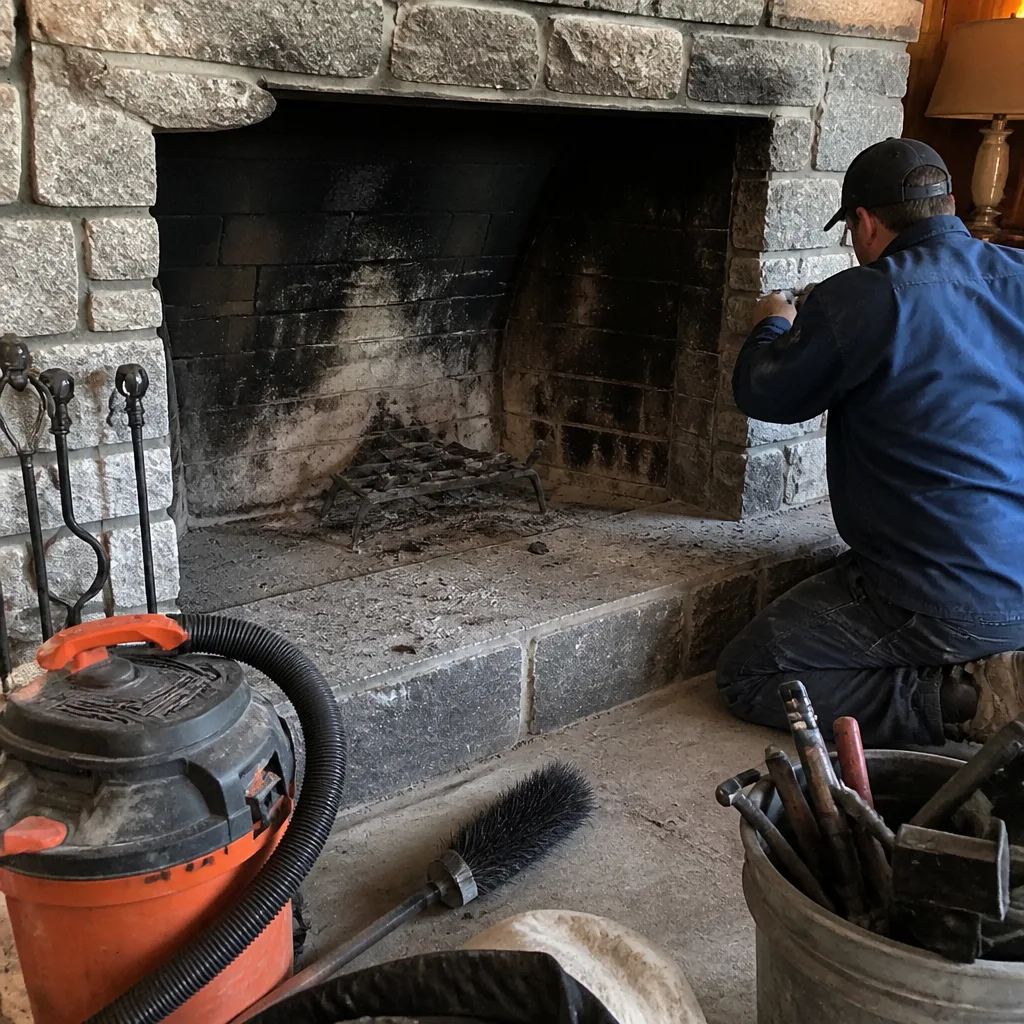
See the difference
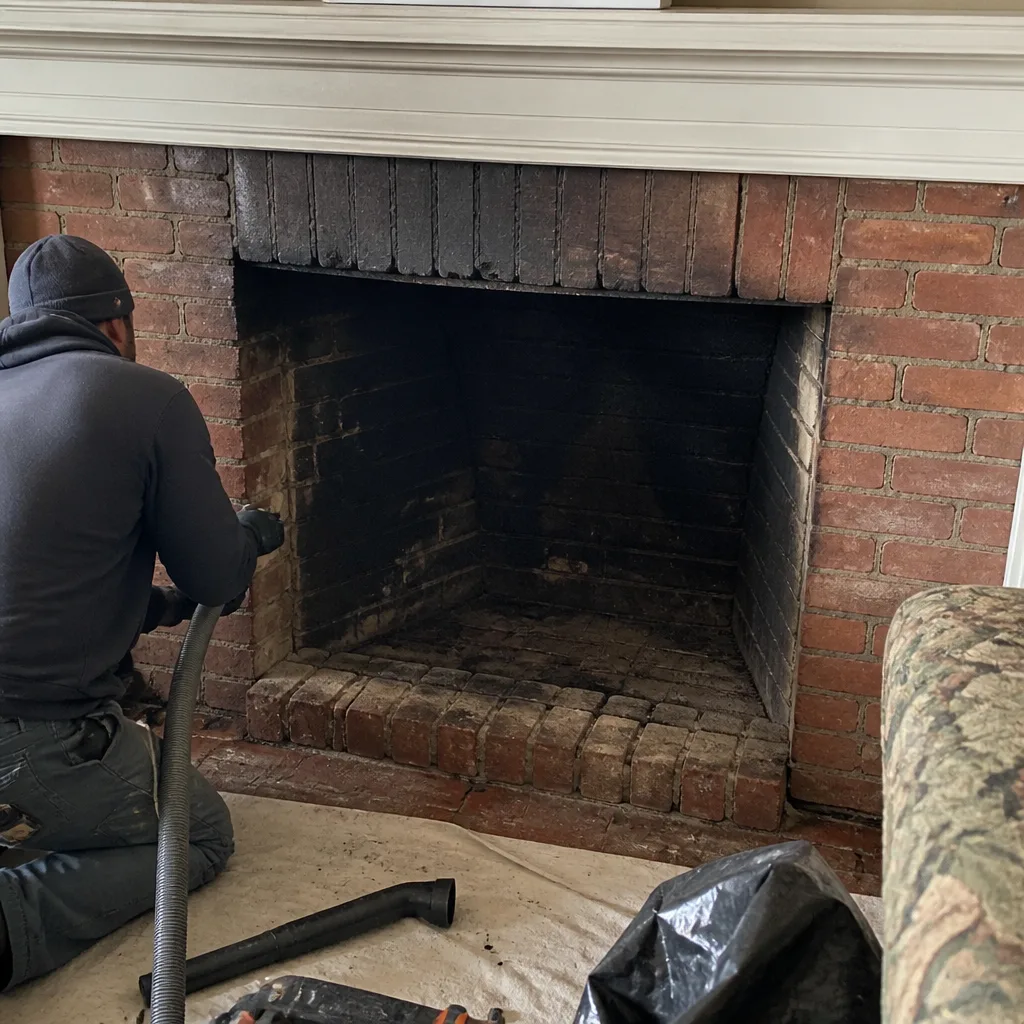 Before
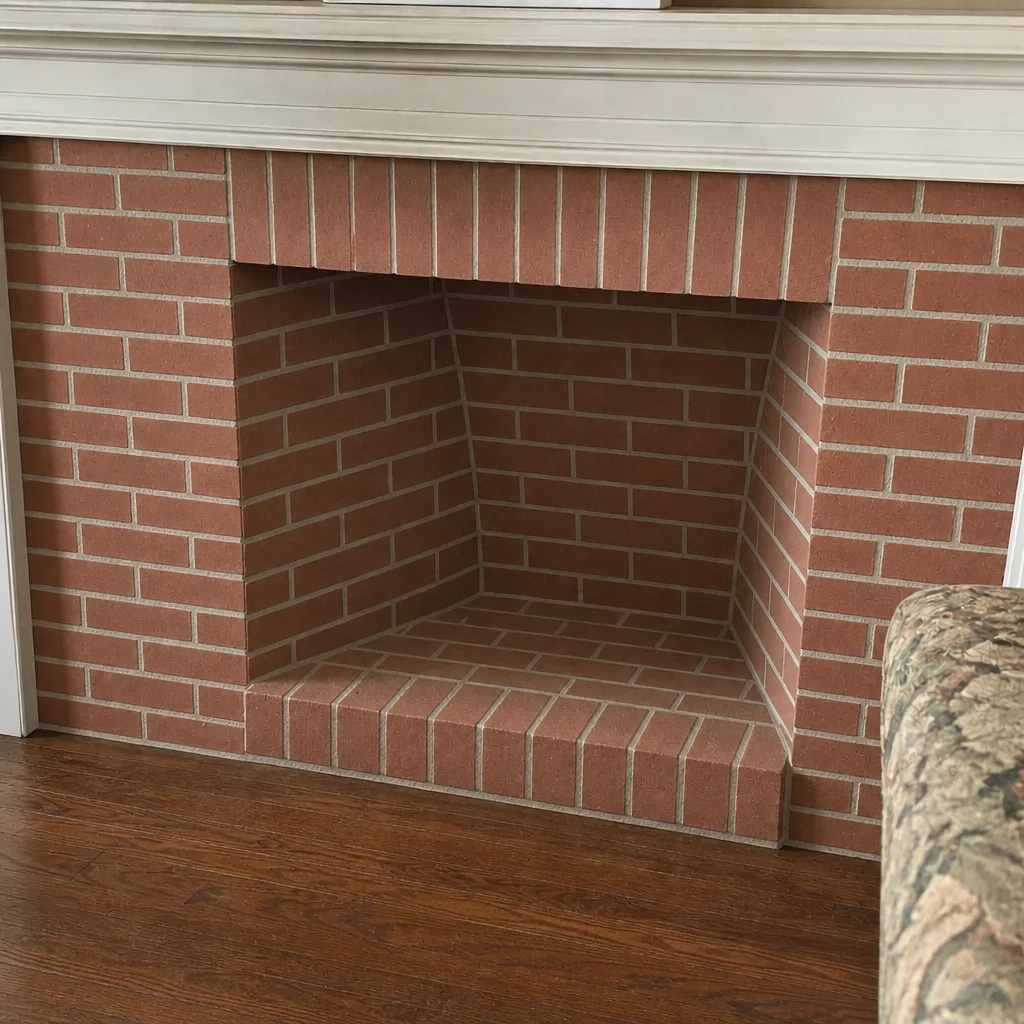 After
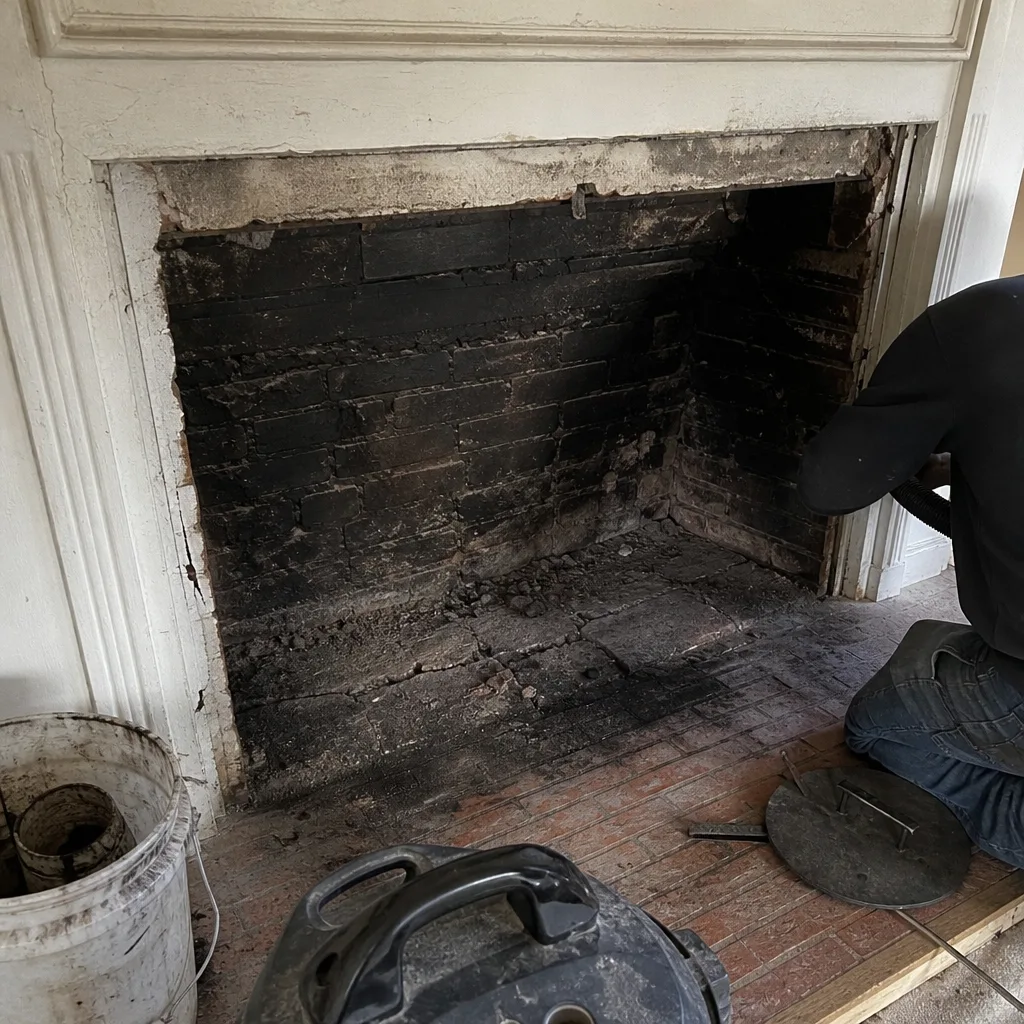 Before
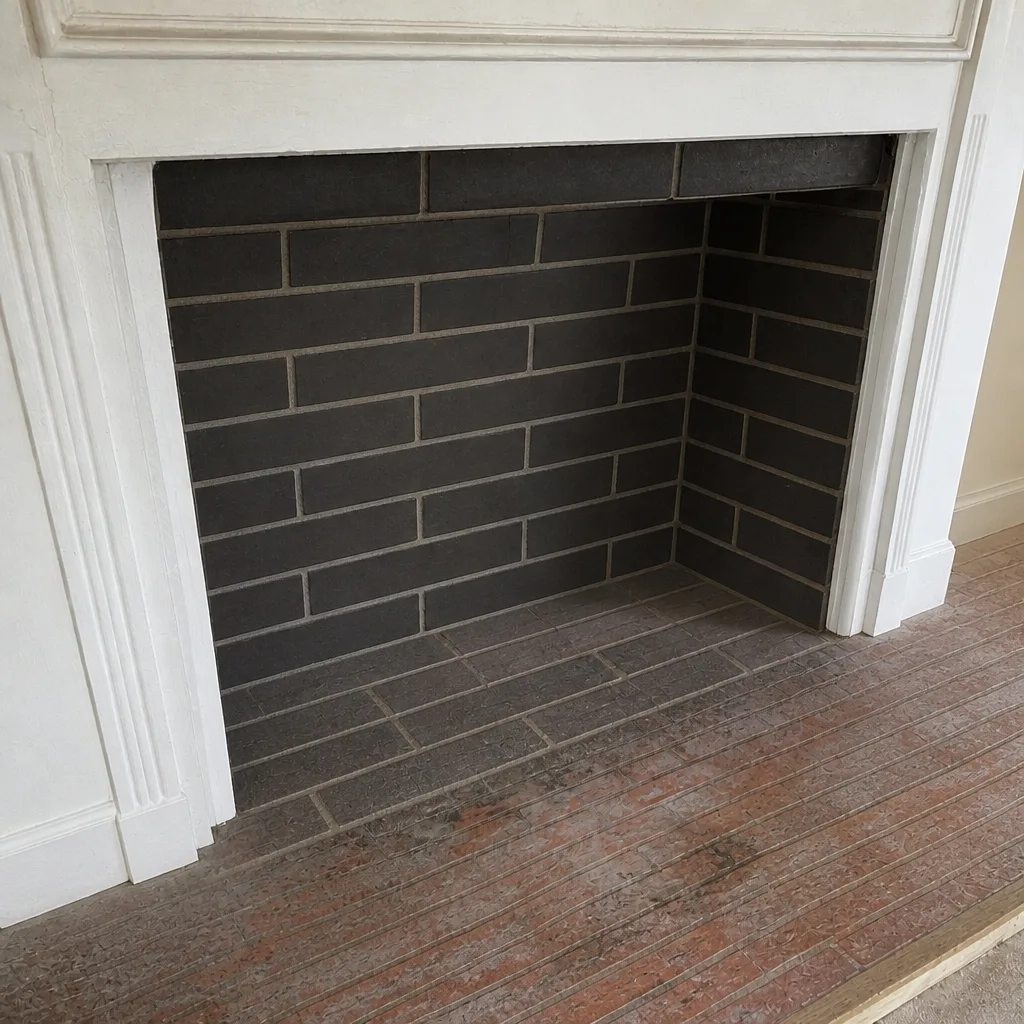 After
 Before
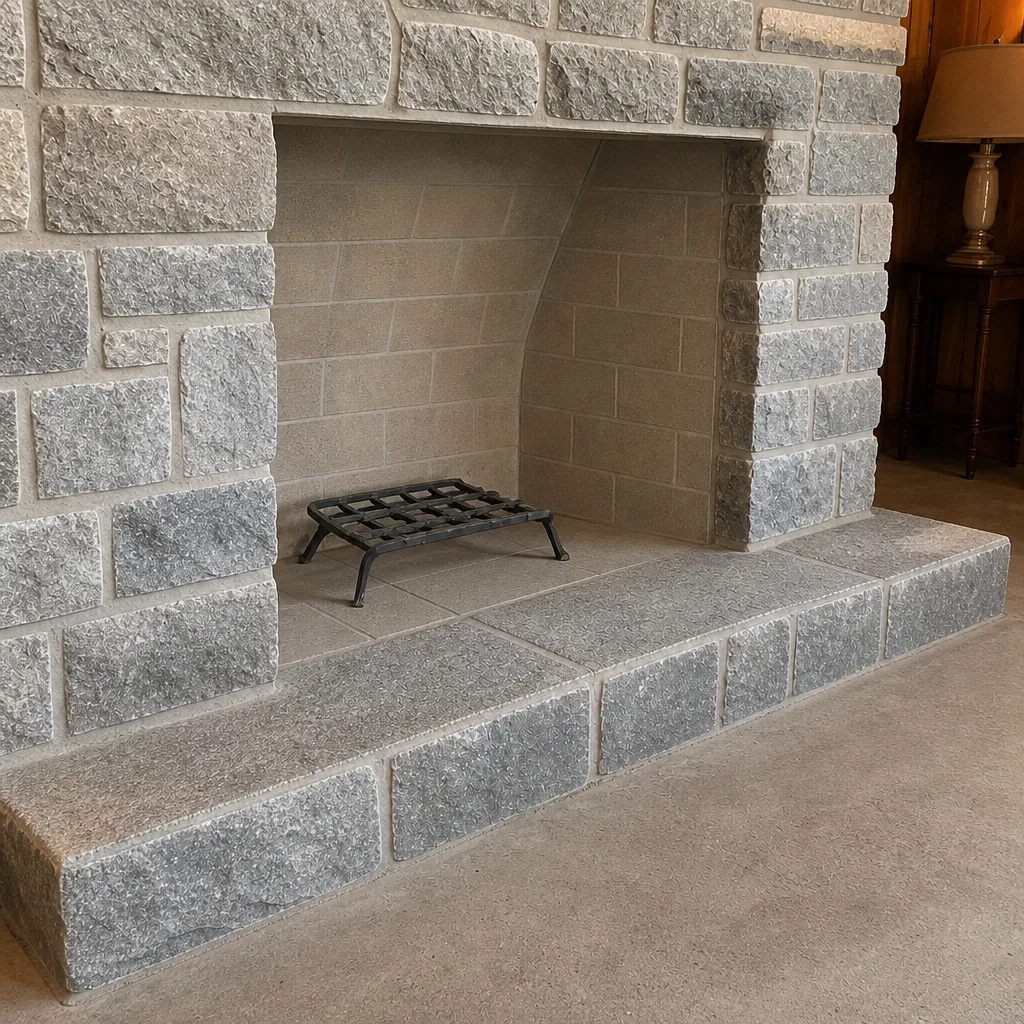 After
When to Call a Professional
Call a professional chimney service in Stapleton when any of these situations apply: you’ve just bought a home and don’t have documented inspection history for the chimney; you smell smoke in the house when there’s no fire burning; your fireplace smokes into the room on cold starts or has changed how it drafts; you see a damaged cap, a cracked crown, or a wiped-off mortar joint from the ground; you have a gas appliance connected and haven’t had the flue inspected for a few seasons; your home is older and you don’t know whether the flue is lined or how; or your last inspection was more than a year ago and you use the fireplace regularly.
Chimney Sweep Stapleton offers free estimates in Stapleton (call (866) 280-5786). We answer 24/7. Fast dispatch from 7am to 7pm, Sunday through Friday. We inspect before we recommend, hand over a photo report so you can verify every finding yourself, and work only from an agreed written estimate, with a flat-price scope confirmed before the job is booked. Call (866) 280-5786. We answer 24/7. Fast dispatch from 7am to 7pm, Sunday through Friday.
Frequently Asked Questions
Wood-burning chimneys should be swept and camera-inspected once a year. Gas inserts typically need inspection and cleaning every two to three years or per the appliance manufacturer’s schedule, and unused chimneys should still be inspected periodically because they weather whether they’re used or not. Call (866) 280-5786 for an exact quote on a sweep; estimates are free.
Skipping maintenance slowly and silently allows creosote to build up in the flue, which is the fuel for a chimney fire; lets water in through a failed cap or crown, which damages the liner and masonry; and lets the smoke chamber and firebox deteriorate unmonitored. None of these fail fast, and all of them are far cheaper to address early. Call (866) 280-5786 for a free estimate if you haven’t had your chimney inspected in over a year; estimates are free.
Not unless the camera shows you need one. A liner repair is recommended only after a flue camera inspection documents a crack, gap, missing tile, or failed section that can’t be sealed. In some cases, HeatShield ceramic resurfacing can bring the flue into compliance without full replacement. Call (866) 280-5786 to book an inspection with a photo report; estimates are free.
Yes. A fireplace that draws well can still have a liner crack, a failing smoke chamber, or a compromised firebox that doesn’t affect draft yet. Draft is a poor indicator of safety; a camera is a reliable one. Call (866) 280-5786 to book an inspection in Stapleton; estimates are free.
Yes, safely from the ground with binoculars. Look for a cap that’s sitting straight and covering the flue opening, intact mesh, and a crown that’s level with no cracks you could slide a fingernail into. Anything beyond that, or any repair, should be handled by a technician on proper equipment. Call (866) 280-5786 for a free estimate on cap and crown work; estimates are free.
A maintenance log gives you and any future contractor the direction of change: whether a crack is stable or growing, and whether a component was already documented as deteriorating. That record matters for repair decisions, insurance, and any future sale of the home. Our inspections include a photo report so that record starts with your first visit. Call (866) 280-5786 to book an inspection in Stapleton; estimates are free.
The Bottom Line
Chimney maintenance in Stapleton is component maintenance, not an annual checkbox. Check the cap, crown, flashing, and exterior masonry from the ground every fall, and have the flue, smoke chamber, damper, and firebox inspected by a professional on the schedule that fits your appliance. Keep a log with dates and photos so progressive deterioration is visible before it’s expensive, and hand over documented findings to any contractor or insurer who needs them. If a repair is on the table, insist on seeing the camera evidence first. Chimney Sweep Stapleton works with DuraFlex, HeatShield, Gelco, Olympia Chimney, Famco, and Copperfield products to sweep, inspect, repair, and restore a full chimney in one visit. Call (866) 280-5786 for a free estimate. We answer 24/7. Fast dispatch from 7am to 7pm, Sunday through Friday.
Written by the team at Chimney Sweep Stapleton.